
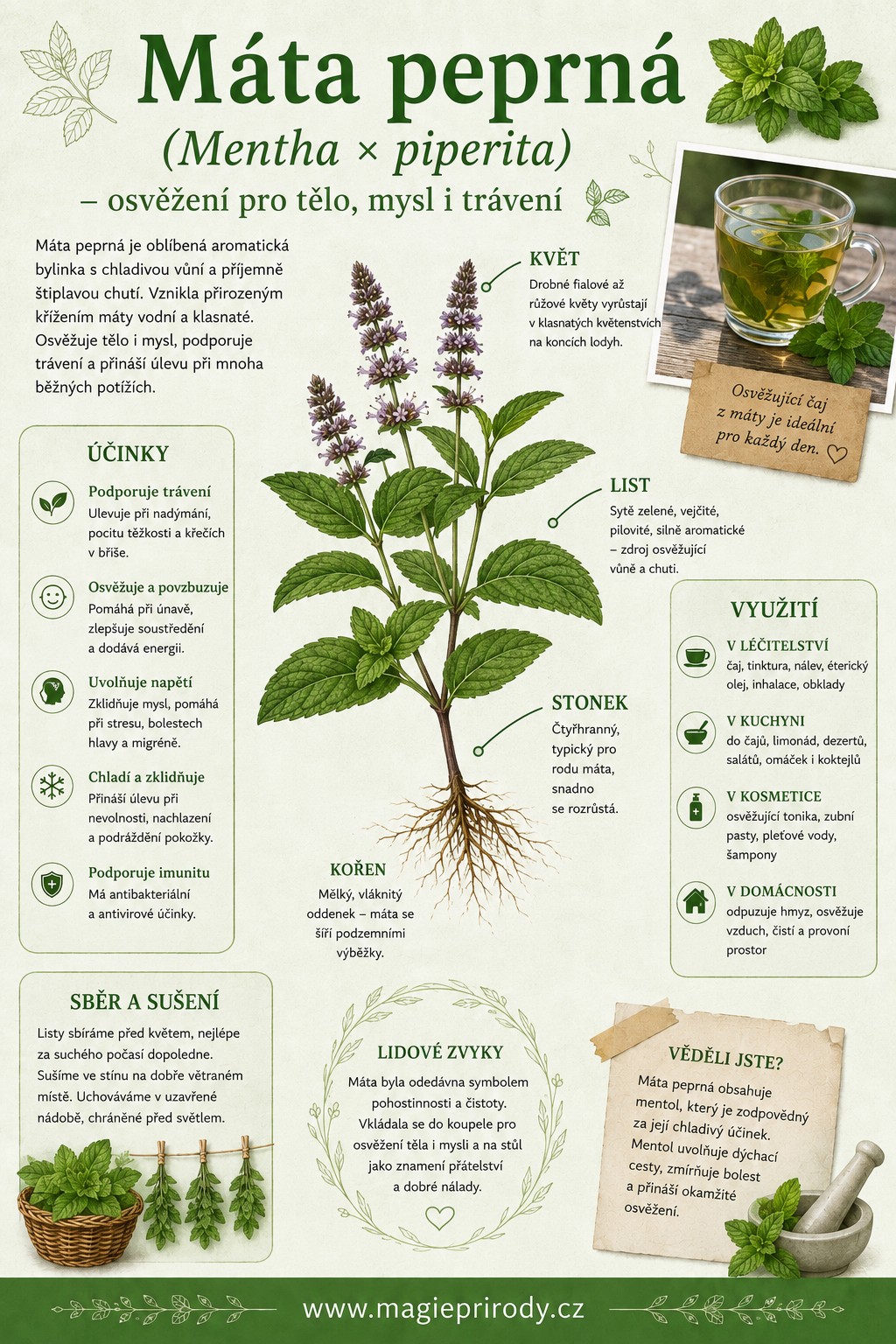
Peppermint (Mentha × piperita) – Refreshment for Body, Mind and Digestion
Peppermint (Mentha × piperita) is a perennial medicinal herb from the mint family, created by a cross between water mint and spearmint. It contains an essential oil with menthol and menthone, tannins and flavonoids. It has cooling, antispasmodic, antibacterial and refreshing effects – it helps with digestive problems, bloating, headaches and colds.
Mint is one of the most popular medicinal herbs , and its unmistakable cooling scent refreshes body and mind. In this guide you will learn what effects peppermint has, how to grow, harvest and use it correctly in the kitchen, in cosmetics and in your home medicine cabinet.

Botanical description and occurrence
Peppermint grows 30–80 cm tall, has a square, purplish stem, ovate-oblong toothed leaves of dark green color and small light purple to pink flowers arranged in spikes. It flowers from July to September. The whole plant has a characteristic cooling menthol scent. It is a cultivated hybridthat does not spread by seed – it is propagated exclusively by rhizomes and cuttings. It grows in gardens and herb beds throughout Europe.
Medicinal effects of peppermint
Mint is a universal medicinal herb with a wide range of effects:
- Digestion – it eases cramps, bloating and nausea and supports gallbladder function
- Headaches and migraines – a menthol balm on the temples eases tension
- Colds and a runny nose – inhalation clears the airways
- Fatigue and lack of focus – it refreshes and improves attention
- Travel sickness – it eases nausea
- Skin and itching – it soothes insect bites and irritation with its cooling effect
- Bad breath – it naturally freshens and cleanses the mouth
Uses of mint in the kitchen and cosmetics
In the kitchen , mint is one of the most versatile herbs – it is added to drinks (mojitos, lemonades, iced teas), desserts, chocolate, salads, lamb, sauces and tabbouleh. In cosmetics , you will find mint in toothpastes, mouthwashes, shampoos, facial toners and body lotions for its refreshing and cooling effect. Mint essential oils are among the basic ingredients of aromatherapy.
Magical and spiritual use of mint
In folk magic, mint is a symbol of cleansing, abundance, protection and healing. It is traditionally used:
- to attract money and prosperity – leaves in your wallet for abundance
- as protection of the home – bundles by the door repel negative energy
- in cleansing baths before meditation or an important decision
- for clarity of mind and focus – the scent of mint stimulates the brain
Recipes – tea, inhalation, syrup
Mint tea for digestion and refreshment
Ingredients:
- 1 teaspoon of dried leaves (or 5–6 fresh ones)
- 250 ml of hot (not boiling) water
Method:
- Pour hot water over the leaves and cover.
- Steep for 5–7 minutes.
- Strain and drink 2–3 cups a day, preferably after meals.
It helps with bloating, stomach complaints, nausea and fatigue.
Mint inhalation for colds
Ingredients:
- 2 tablespoons of dried mint leaves (or a handful of fresh ones)
- 1 liter of boiling water
Method:
- Put the mint in a bowl and pour over boiling water.
- Lean your head over the bowl and cover it with a towel.
- Inhale the steam for 5–10 minutes with your eyes closed.
It clears a blocked nose and sinuses and soothes coughs.
Homemade mint syrup
Ingredients:
- 2 handfuls of fresh mint leaves
- 500 ml of water
- 500 g of sugar
- the juice of 1 lemon
Method:
- Pour boiling water over the mint leaves and let them steep overnight.
- Strain and add the sugar and lemon juice.
- Boil for 10 minutes until the sugar dissolves and pour into sterilized bottles.
Great in lemonades and cocktails, on ice cream or in tea. It keeps in the refrigerator for up to 3 months.
Harvesting and drying mint
Harvest mint leaves from June to August, ideally before flowering or at the beginning of flowering, when they have the highest essential oil content. Harvest on a dry, sunny morningonce the dew has dried. Cut whole stems and tie them into small bundles. Dry them hanging upside down in a dry, dark, ventilated place at a temperature of up to 35 °C – higher temperatures destroy the essential oils. Drying takes 5–10 days.
Warnings and contraindications
Mint is generally very safe, but long-term use in large amounts may irritate the stomach and worsen reflux. It is not recommended for children under 2 , and do not use menthol oils on infants (risk of laryngeal spasm). During pregnancy and breastfeeding , consume it in moderation. Take care with gallstones and when taking certain medications (e.g. blood thinners).
Interesting facts about mint
- The name "mentha" comes from Greek mythology – from the nymph Minthe, whom the goddess Persephone turned into a plant.
- Peppermint was first recorded only in 17th-century England as a natural cross between two wild mints.
- It is one of the most widely cultivated medicinal plants in the world .
- Menthol from mint is used in thousands of products – from chewing gum to muscle balms.
• Frequently asked questions about peppermint – FAQ
What is peppermint good for?
Peppermint helps with digestive problems, bloating, nausea, headaches and colds. It has refreshing, cooling and antibacterial effects. It is used as a tea, inhalation, syrup, essential oil or as a culinary herb.
How do I make mint tea?
For one cup, use 1 teaspoon of dried leaves (or 5–6 fresh ones), pour over 250 ml of hot (not boiling) water and cover. Let it steep for 5–7 minutes, strain and drink 2–3 cups a day, ideally after meals.
Does mint help with digestion?
Yes, mint is one of the most effective herbs for digestion. It eases stomach cramps, bloating and nausea and supports gallbladder function. Menthol relaxes the smooth muscle of the digestive tract. A cup of tea after a meal is a traditional remedy for a feeling of fullness.
When should mint be harvested?
Harvest mint from June to August, ideally before flowering or at the beginning of flowering, when the leaves have the highest essential oil content. Harvest on a dry, sunny morning. Cut whole stems and dry them hanging upside down in a dark, ventilated place.
What is the difference between peppermint and spearmint?
Peppermint (Mentha × piperita) has a higher menthol content and a stronger cooling taste and is used mainly medicinally. Spearmint (Mentha spicata) is sweeter and less sharp, and is often found in chewing gum and cocktails (mojitos). Spearmint is a parent species of peppermint.
How do I grow mint at home?
Grow mint in a pot or an edged bed – in open ground it spreads quickly through its rhizomes. It needs moist soil, partial shade and regular watering. It is propagated by cuttings or division; seeds do not work for peppermint. Harvest regularly so that it produces new shoots.
Does mint help with headaches?
Yes, mint eases tension headaches and migraines. Rub a drop of peppermint essential oil on your temples and forehead (diluted beforehand in a carrier oil) or apply a cool compress of mint infusion. The effect comes within a few minutes.
Does mint have side effects?
With normal use, mint is very safe. Long-term high intake may irritate the stomach and worsen reflux. Do not use menthol oil on infants and children under 2 (risk of laryngeal spasm). During pregnancy, consume it in moderation.
How should dried mint be stored?
Store the dried leaves in an airtight container (glass or metal) in a dark, dry place. It keeps its active essential oils for approximately 12 months. Avoid plastic bags and direct sunlight – mint quickly loses its aroma and color.
Can mint be frozen?
Yes. Mint freezes very well – chop fresh leaves, put them in an ice cube tray and cover with water. This makes a handy cube for lemonades or cocktails. You can also simply freeze the leaves in a bag and use them in tea. It keeps in the freezer for 6 months.